
Lost, Together
On slowing down and sensemaking together

I got lost recently.
I had just finished a meeting in a part of the city where I used to live and was heading to pick something up on the east side of town. It’s a path that I took regularly when I lived in the area. I was listening to a podcast and suddenly realized I wasn’t where I thought I was. I’d either missed a turn or turned too early. The streets in this part of the city are anything but a grid. They meander and curve in a way that makes for pretty vistas but tricky navigation.
I took a couple of turns, trying to find my orientation. I kept saying to myself “Ok, I know where I am.” But after another turn of a curving residential street, I again realized I was lost. Rather than stop, pull out my phone, and get directions, I kept turning for another five minutes or so. Finally, I came to a major thoroughfare on exactly the opposite side of the neighborhood from where I wanted to be. “How did I get here?” I asked myself.
This particular detour had low stakes. I wasn’t in a hurry, and the neighborhood’s early twentieth-century architecture made for a pleasant exploration.
I’m usually quite good at orientation. I tend to have a map in my head of familiar places and have an internal sense of direction that usually steers me well. But in this case, a moment of distraction at a crucial turn left me disoriented. I couldn’t make sense of the meandering streets.

I lost my way.
Had the stakes been higher, I would have needed help to find my way again.
Finding our way together
When we lean into networks or organizations seeking to make change, profit, or some combination of the two, we agree to try to find our way together. Governance, in many ways, is the act of figuring out how to journey together. While some important governance work happens in the boardroom, governance dynamics play out in any space where people come together with shared purpose. I’ve written recently about moments of governance and things that can derail us in the process. But what does the actual work of governance contain?
A big part of governance is sensemaking, understanding the ever-changing, complex, and interdependent worlds around us.
Governance is, at its core, a collective effort to make sense of a changing world. We read signals – big and small – from small changes in donor behavior or sales patterns to gigantic shifts in geopolitics and cultural norms.
In my experience, most networks, businesses, and organizations spend a lot of time in situations like the one where I found myself last week, wandering about in a slightly confusing swirl of information, unsure exactly how to react. It’s easy to ignore small trends in data. It’s even easier to ignore the quiet gut instincts that give us pause, especially because they’re hard to name and discuss with collaborators. It’s easier to pour oneself into established and familiar practices and routines, to continue to execute on an “approved” plan. Slowing down together to make sense of a rapidly shifting reality takes time, energy, and attention. Leaning into different ways of knowing takes discipline and skill. It opens us up to the possibility of conflict, especially if people see/feel different things. This becomes an even greater issue if the situation or data raises a feeling of threat or fear.
And yet such time for slowing down and making sense of what is happening is critical. In highly volatile times when many of the familiar pillars around us don’t feel as stable as they once did, collective sensemaking is perhaps our most valuable team and governance skill.
The art of sensemaking
Perhaps my greatest learning in the past few years is that sensemaking takes time. And lots of energy. Especially the most precious kind: emotional energy.
But if we don’t spend the time, we can get lost, with far worse outcomes than the seven minutes I lost last week driving about a lovely neighborhood in early fall. The stakes of poor sensemaking rise dramatically in crisis situations. History offers sobering examples.
Karl Weick’s classic article on the Mann Gulch Fire developed the idea of sensemaking as part of organizational life. He explores the tragic outcomes in one fast-moving disaster when sensemaking collapsed. Faced with an extreme wildfire, chaotic conditions, and divergent approaches among team members, a team of firefighters failed to make sense of a rapidly evolving, unprecedented situation. In Weick’s words, this was a disaster where “people were unable to negotiate strangeness.” A leader’s focus on a framework designed to deal with theoretical situations over the group’s ability to communicate about the situation in the moment led to a collapse of trust, honesty, and self-respect, to disastrous results.
I love how Weick framed his work around a real story, rather than just presenting theory.
The sensemaking failures I’ve experienced have not been as dangerous or deadly as the Mann Gulch fire, but I’ve certainly experienced the collapse of trust, honesty, and self-respect as a team has moved in increasingly autonomous ways, seeking personal clarity rather than group clarity. I’ve seen this lead to organizational collapse. But far more often, I’ve seen it lead to diluted efforts at critical moments, strained relationships, and deepened fatigue and burnout.
Slowing down to do sensemaking
I don’t think I’ve ever lived through a season with as many big questions as this current time on planet Earth.
It is jarring to see elements of our social contract, our national life, and our geopolitical context that have been stable throughout the 50 years of my life suddenly seem less certain.
It is hard to make sense of it. I feel that myself, and I see organizations and networks I’m part of or close to struggling, too.
This felt especially real earlier this month in the immediate aftermath of the Charlie Kirk assassination. I watched individuals and organizations make statements, many times before the facts of what had happened were even clear. Social media of all sorts was ablaze with opinions that fed on and inflamed one another.
If one thing is clear, it is that social media is not a space for meaningful sensemaking. As a space so often devoid of trust, honesty, and self-respect, it seems to merely fan the flames of disorientation and anxiety.
I’ve found that personal conversation and connection works in quite opposite ways, reminding me that others feel the disorientation that I do. They struggle to understand what is happening and what it means. They remind me that it’s ok to be human, to not have an immediate answer.
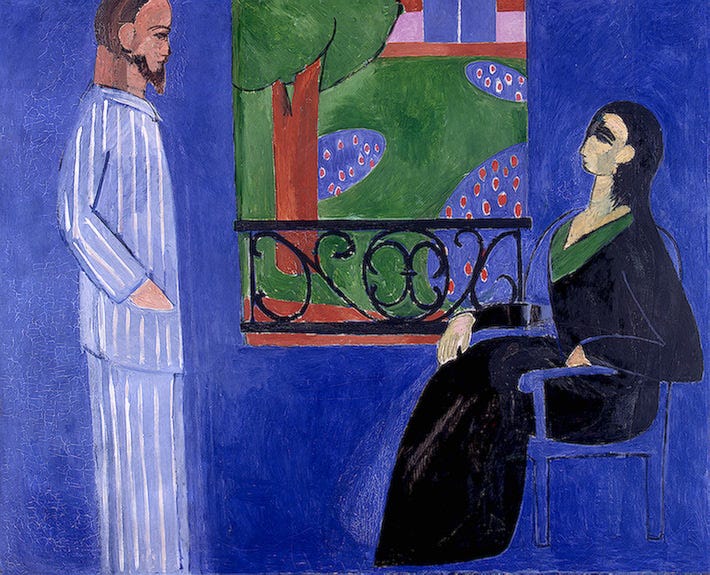
Perhaps the most important aspect of those sensemaking conversations has been the reminder that I’m not crazy. It’s easy to feel a little crazy in these – well – crazy times. I’ve been surprised at how grounding human connections can feel, how they open doors to creativity and even to a sense of flow and possibility.
Sometimes the most grounded thing we can do is pause, ask for directions, and remember we’re not navigating this terrain alone. If we’re going to be lost, let’s be lost together.
If this resonates, you might take a moment to reflect on…
When have I felt disoriented – personally or professionally – and what helped me reorient?
Where in my life or work am I moving too quickly to truly make sense of what’s happening?
Who are the people I trust to help me make sense of complexity, and how can I create more space for those conversations?
Finally, here are a few articles and videos that I’ve appreciated lately:
I find John Vervaeke’s Four Ways of Knowing helpful in thinking beyond knowledge and skills to our vantage points and our relationships. Rich Watkins’ short video presents this complex thinking in very accessible ways.
The Collective Change Lab’s recent Medium piece speaks to the power of “islands of coherence.” I appreciate this as it embodies different ways of knowing right in the flow of the article.
Sam Kahn in Persuasion on the importance of humility about the limits of our knowledge.
My friend Andrew DeCort on grounding in hope.
John Kania on how systems transform: “Technologies scale, programmes can scale, but systems don’t scale, they transform.”
Ready to go deeper? Let’s work together.
If the themes in my writing resonate with you, know that you’re not alone. I work with numerous individuals and organizations who are navigating uncertain terrain and seeking clarity, alignment, and renewed purpose. Drawing on the same reflective approach I share in my writing, my coaching and consulting practice offers space to pause, listen deeply, and move forward with intention. Learn more about how we might work together at jasonferenczi.com.